Key questions remain about the operational and financial viability of a completely paperless bank such as India Post, says Mayank Jain.

After a recent fall in profit, Masayoshi Son of SoftBank announced that the Japanese tech investor will look at dramatic cost-cutting. Before he does that, investments in India for calendar year 2022 (CY22) will fall radically, observed sources in the know. Last year, the company had invested around $3.2-3.5 billion in the Indian start-up ecosystem - almost 10 per cent of the total investment the sector received. For CY22, the investments may not even touch $1 billion.

The project, anchored by National Highways Authority of India in partnership with National Payments Corporation of India, is gaining momentum, with big banks such as ICICI and non-bank entities like Paytm have also entered the arena.

In the excitement over the allocation of bank licences for the private sector, a new category of licence offered by the Reserve Bank of India (RBI) last year went almost unnoticed. That was when the RBI consolidated the rules for prepaid payment instruments (PPI), popularly understood as e-wallets or gift cards. In the process, the regulator has fast-forwarded a bottom-up card usage industry in India that is completely different from the world of bank-linked credit and debit cards.

Either drivers were blissfully unaware of the requirement or they hadn't bothered to get one installed in their vehicle.

While payments banks surely lose money, their operating ratios were looking better in 2017-18 compared to the year before. This implies that as customer volumes start picking up, the business models may perk up too, says R Jagannathan.

Vijay Shekhar Sharma, head of Paytm, says they'd achieve their 500-million user target by 2018, two years before the earlier aim.

With a surge in users and transactions in two weeks, payment wallets step up cashbacks to get more users online.

Paytm plans to induct 5,000 manufacturers and sellers; has started programmes to identify and train new sellers.
There seems to be no dearth of funds to fuel this growth, report Peerzada Abrar and Shivani Shinde.

From small retailers' experiences with e-wallets to digital transaction numbers post demonetisation, Geetanjali Krishna and Karan Choudhury find out where the truth lies.

Omkeshwar Singh, Head, Rank MF, a mutual fund investment platform, answers your mutual fund queries.

Yes Bank customers will be able to access full banking services from Wednesday evening, as the moratorium will be lifted earlier. The RBI had on March 5 put a moratorium on Yes Bank restricting withdrawals to Rs 50,000 per depositor till April 3. However, the government in a notification on Saturday said the moratorium will be lifted by 18:00 hrs on March 18.

In these times of Rs 2,000 notes and digital payment apps, Syed Firdaus Ashraf tries to book tickets for Dear Zindagi.

'We have focused on profitable revenue, cash generating businesses, throughout our journey.'

FSN E-Commerce Ventures, which runs online marketplace for beauty and wellness products Nykaa, has filed preliminary papers with markets regulator Sebi to raise Rs 3,500-4,000 crore through an initial share-sale.

'Investors with as little as Rs 1 can start investing in digital gold.'

Safety standards are thrown to the wind as government urges consumers to use mobile wallets at petrol pumps, Shine Jacob & Karan Choudhury/Business Standard report from New Delhi.

It's raining IPOs, with eight issues hitting the market in a span of six days. However, the pace of new filings points to a deluge during the latter part of the year. So far this year, 58 companies have filed their draft red herring prospectus (DRHP) with the market regulator for initial public offerings (IPOs), exceeding the combined tally of 50 in the last two years. Industry participants said the filing count could cross 100 this year, setting a new benchmark in terms of amount mobilised in a calendar year.

Snapdeal said it will give its users the option to defer the delivery by a few days till new currency notes become easily available.

The best part is that an investor gets price appreciation and earns interest income as well, which is unique only to sovereign gold bond.

While BlackRock is an existing investor in Byju's, T Rowe joined as a new investor.

IPO-bound mobility platform Ola, said it has successfully raised $500 million via a Term Loan B (TLB) from marquee international institutional investors. This term loan has no impact on the valuation of Bhavish Aggarwal-led Ola. The Bengaluru-based firm recently raised $139 million. This is part of a $1 billion funding round for which the company is in talks with investors, increasing its valuation to about $7.5 billion, according to the sources.

Blackstone, KKR, and Bain Capital, among others, are in the race for its general insurance arm, and Bandhan Bank, Bain, and Dabur Investments have shown interest for RCap's 51 per cent stake in the life insurance business.

For large start-ups the US market is considered to be a preferred destination, as Indian investors were seen as hesitant to pay the kind of valuation private equity investors or the US markets pay. However, Zomato's listing has quashed these notions.

Growth-oriented technology companies have raised Rs 15,000 crore through initial share sales in the last 18 months and IPOs worth around Rs 30,000 crore by such firms are in the pipeline, Sebi chairman Ajay Tyagi said on Thursday. "Growing number of unicorns in the startup ecosystem is a testimony of the new age tech companies coming of age in our economy. These companies often follow a unique business model focusing more on rapid growth than immediate profitability," Tyagi said at an event organised by industry body CII. During the last 18 months, growth-oriented technology companies have raised a sum of around Rs 15,000 crore through IPOs (Initial Public Offerings).

'We expect the bull run to continue until economic growth continues.'
Mobile payments alone gathered close to $1.51 billion in the year 2017 through 13 rounds of funding, according to data compiled by Tracxn

Kishore Singh's encounters with post 8/11 India.

Fresh capital raised by companies by way of initial public offerings (IPOs) is set to hit a 14-year high, thanks mainly to Zomato's maiden offering. India Inc has raised about Rs 19,300 crore in fresh capital by maiden offerings, including the Rs 9,000 crore the food delivery company will raise this week, so far in 2021. The best year in terms of fresh fund-raise was 2007, when companies had raised Rs 32,102 crore. With Paytm planning to issue fresh shares worth Rs 12,000 crore, the domestic market looks set to surpass that tally this year.

Every competitor is eyeing the top slot that Flipkart holds.

Chinese bicycle sharing giant Ofo launches service in seven Indian cities.

While discount brokers have managed to grow at a rapid pace, they have not been successful in capturing substantial market share in the above-40 age category.

'Most of the measures the finance minister announced will take effect after the lockdown.' 'By that time, millions of people will be starving.'

The currency ban has changed the lives of the people facilitating this move across India.
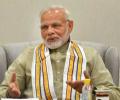
The Department of Posts was one of the 11 entities to get the in-principle nod from the Reserve Bank of India in 2015 for setting up a payments bank.

That's because India does not have a serious venture capital industry with an appetite for risk, observes T N Ninan.

'No cash,no problem,' says Aparna Verma who has survived without cash from the time PM Modi announced the 'note ban'.

At a time when the Modi government is attempting to push cashlessness with coercive means, Devangshu Datta explains why cash usage is popular even in nations with good cashless infrastructure.

US start-ups crash and burn frequently, so why the concern about start-up losses in India? The principal reason, says Kanika Datta, is that Indian start-ups clone ideas from the US. Flipkart, Ola, Oyo, Paytm are all variations of ideas developed in the US.
 © 2026 Rediff.com - Advertise with us - Disclaimer - Privacy Policy - Sitemap - Feedback - About us - Terms of use - Grievances